Datenschutzeinstellungen
Wir verwenden Cookies, um unsere Website zu optimieren und Ihnen das beste Erlebnis zu bieten. Bitte wählen Sie, welche Cookies Sie erlauben möchten.
Erforderlich (immer aktiv)
Notwendige Cookies damit die Website korrekt funktioniert.
Weitere Informationen finden Sie in unserer Datenschutzerklärung.

Strength training in old age – fit and safe through the second half of life
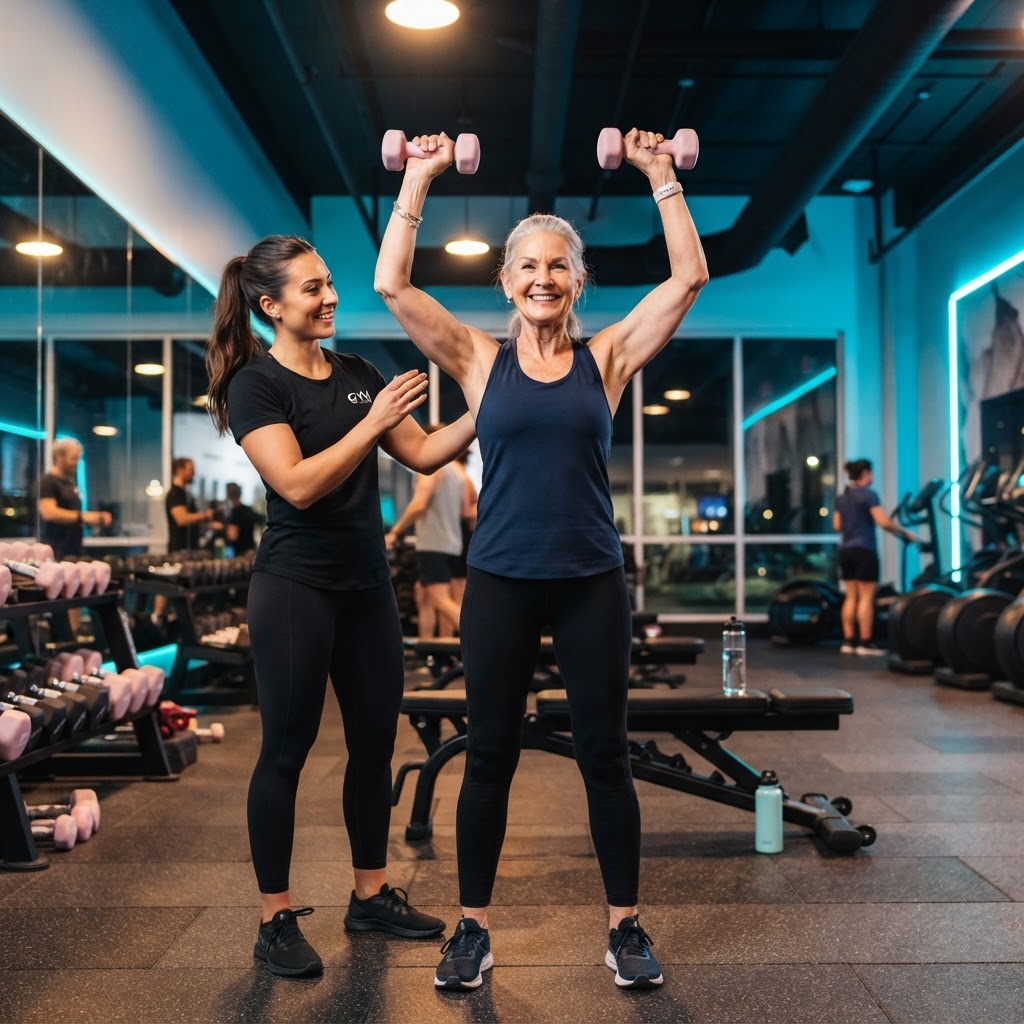
Those who train their body specifically from 60 invest not in a separation plan, but in the next half of life. Strength training in old age at BUZZ means: stepwise build-up of muscle strength, preservation of mobility and above all safety in everyday life – stairs, carrying, bending stay natural. We guide you without performance pressure, without magic-start throws, but with a plan that fits your baseline. Those entering in the second half of life get care here that understands age not as a deficit but as a starting point.
*BUZZ is not a medical center and offers no medical advice. Regular movement can positively affect your health. If you have health concerns, please clarify taking up physical activity beforehand with your doctor.
 BUZZ KI Visuals
Why strength training from 60 is so valuable
Over the years the body loses muscle mass – a natural process, not a stroke of fate. Strength training from 60 demonstrably counteracts this decline, preserves metabolism and bone density and gives you the strength you need for stairs, shopping and travel. Those who stay muscularly stable stay self-determined longer.
Fall prevention especially is a central word: a large part of falls in old age has to do with weakened leg and core muscles. Targeted training of legs, hips and balance noticeably lowers this risk – and you return safely into everyday life.
How the training looks in practice
We start where you stand. Those who haven't trained before begin with exercises that build technique and confidence instead of wrestling with high loads right away. Those with experience get a plan that carries the next years and corrects one-sided habits.
Added are mobility and balance – elements many purely strength-focused programs forget, but which from 60 are the backbone of everyday competence. That way a training arises that combines strength, mobility and safety, instead of just shaping a show muscle.
Safety, medication and medical clarification
If high blood pressure, diabetes, joint arthrosis or other chronic companions accompany you, we ask about them consistently. With medication questions – e.g. antihypertensives – the team recommends medical clarification beforehand so that load and health status fit together.
No one expects you at 60 to do the same units as at 25. We expect you to keep your form, your technique stays clean and you spend the next years safely and confidently in your body.
Who is this suitable for?
- People 55–60+ who want to preserve strength and mobility
- Restarters after a decades-long pause
- People with pre-load through high blood pressure or diabetes
- Interested in active fall prevention
- Adults who want to keep stairs and everyday natural long
- Clients who want to train with medical guidance
Your start in 3 steps
Initial talk & baseline
We discuss pre-existing conditions, medication and movement experience and arrange medical clarification if needed.
Build-up plan for strength & mobility
You get a plan that starts with your technique – strength, leg and balance exercises in clear units.
Train safely & adjust
Your trainer checks technique and load and adjusts the training when your everyday life or strength develop.